
Where to Stay in Chicago: Neighborhoods Ranked
The Loop, River North, the Mag Mile, Gold Coast, and the West Loop each give you a different Chicago -- here is how to pick the right home base.
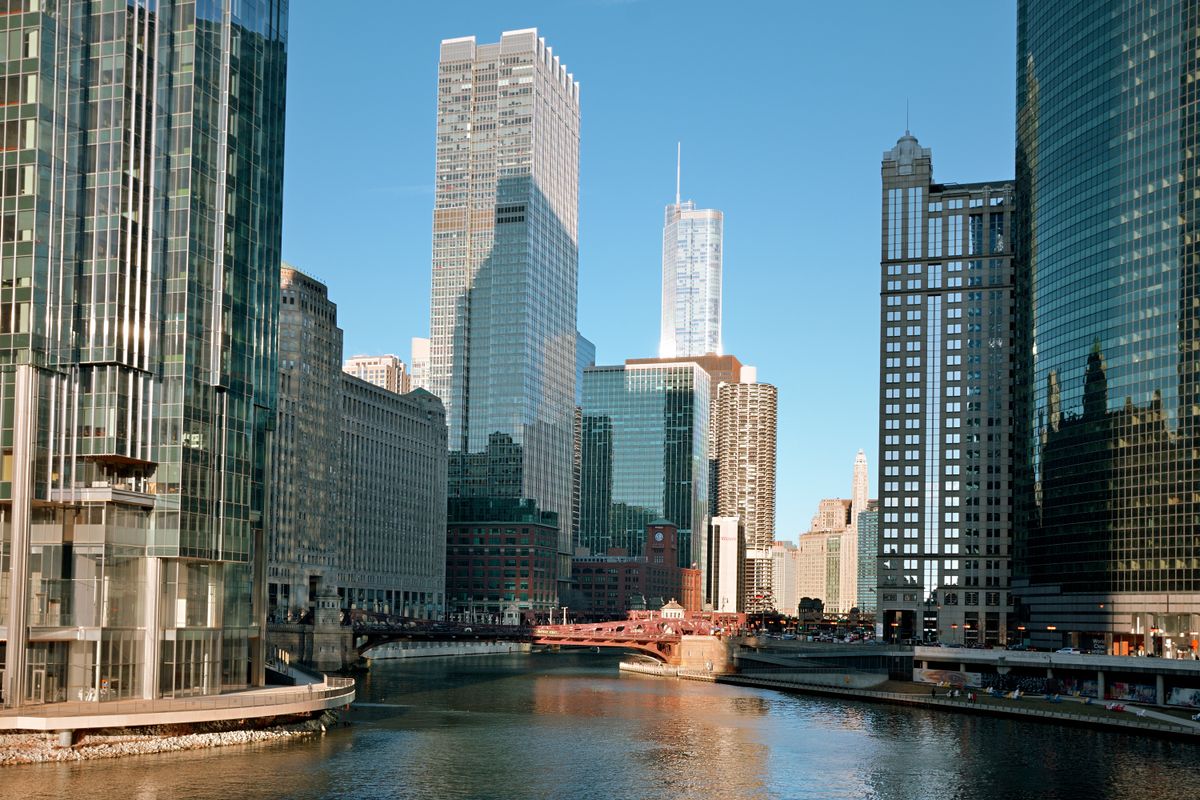
The first time Chicago really lands is usually on a bridge over the river at dusk – the towers lighting up, an architecture boat sliding underneath, the ‘L’ rattling somewhere behind you. Where you sleep decides how often you get that moment. The Langham, Chicago along the river, the Kimpton Gray Hotel in the heart of the Loop, and Soho House Chicago out in the West Loop are three completely different trips, and the neighborhood you choose matters more here than the hotel brand.
We scored 51 verified Chicago properties across every major neighborhood to help you pick the right base. Here is the breakdown.
If you already know your trip style, skip straight to the pages that do the sorting: Chicago luxury stays, Chicago boutique stays, Chicago couples stays, or Chicago family-friendly stays.
The Loop and Millennium Park
Best for: First-time visitors, museum and park lovers, transit-first travelers
This is the postcard Chicago. Millennium Park and the Cloud Gate sculpture, the Art Institute, the Riverwalk, Grant Park, and the Theatre District are all here, and the Loop is the hub where every train line meets – including the direct trains to both O’Hare and Midway. If it is your first trip and you want to step out the door into the center of everything, start here.
The hotel scene leans toward grand downtown properties and polished boutiques. The Kimpton Gray Hotel in a landmarked LaSalle Street building, the Fairmont Chicago, Millennium Park steps from the park, Staypineapple, An Iconic Hotel, The Loop Chicago, and the lakefront Swissotel Chicago show the range – historic finance-district architecture next to full-service towers with skyline views.
The trade-off: The Loop is busiest on weekdays and quieter at night once offices empty out. Well over half of the properties offer parking, but with this much train access you rarely need a car downtown.
Who should book here: Anyone visiting Chicago for the first time who wants museums, the park, and the lakefront within a short walk and the easiest possible airport connections.
River North
Best for: Food and nightlife, gallery-goers, central-but-lively travelers
Just across the river from the Loop, River North packs the highest concentration of restaurants, bars, and galleries downtown into a grid you can cover on foot. It is the natural pick if you want to be central without the office-district quiet – dinner, drinks, and a late walk back to the hotel are all on the same few blocks.
The hotels here are some of the city’s best known. The Langham, Chicago in the Mies van der Rohe-designed tower along the river is a standout luxury base, with the Trump International Hotel & Tower Chicago, the design-led The Godfrey Hotel Chicago, Level Chicago - River North for suite-style stays, and the Kinzie Hotel rounding out the choices.
The trade-off: Weekend nights get loud and busy, which is either the point or a reason to ask for a higher floor.
Who should book here: Couples and friend groups who want walkable access to dining and nightlife while staying right next to the Loop. If you liked Nashville’s energy downtown, River North has a similar central-and-buzzy feel with a big-city polish.
Where We’d Stay in Chicago
See all 51 →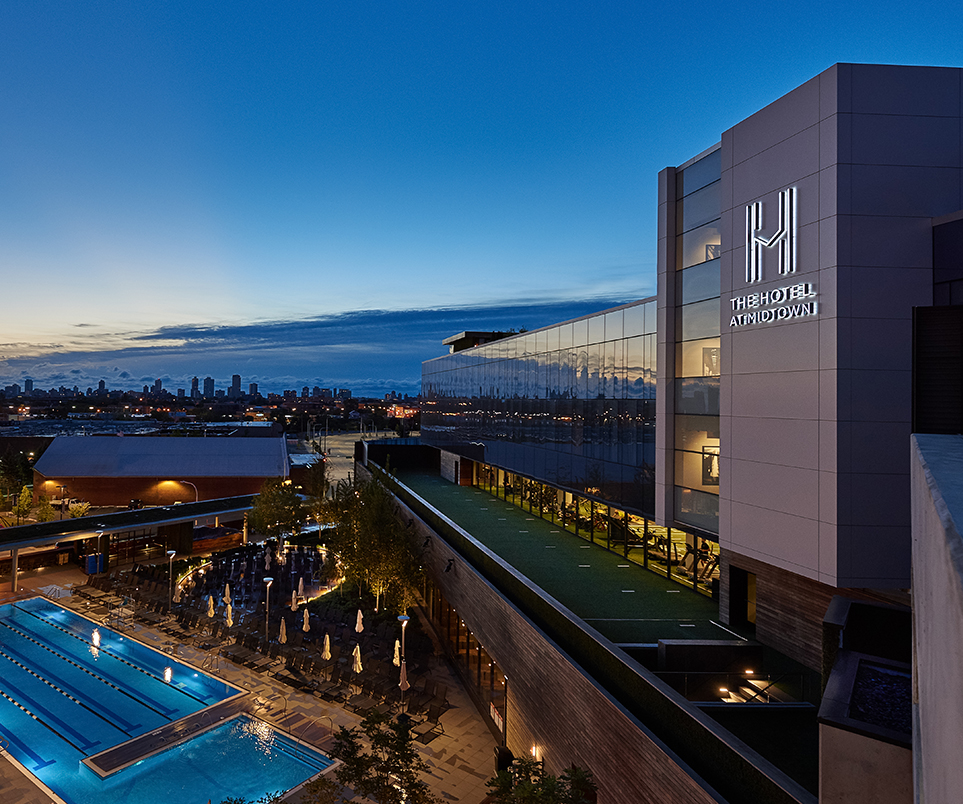
The Hotel at Midtown
Check Rates →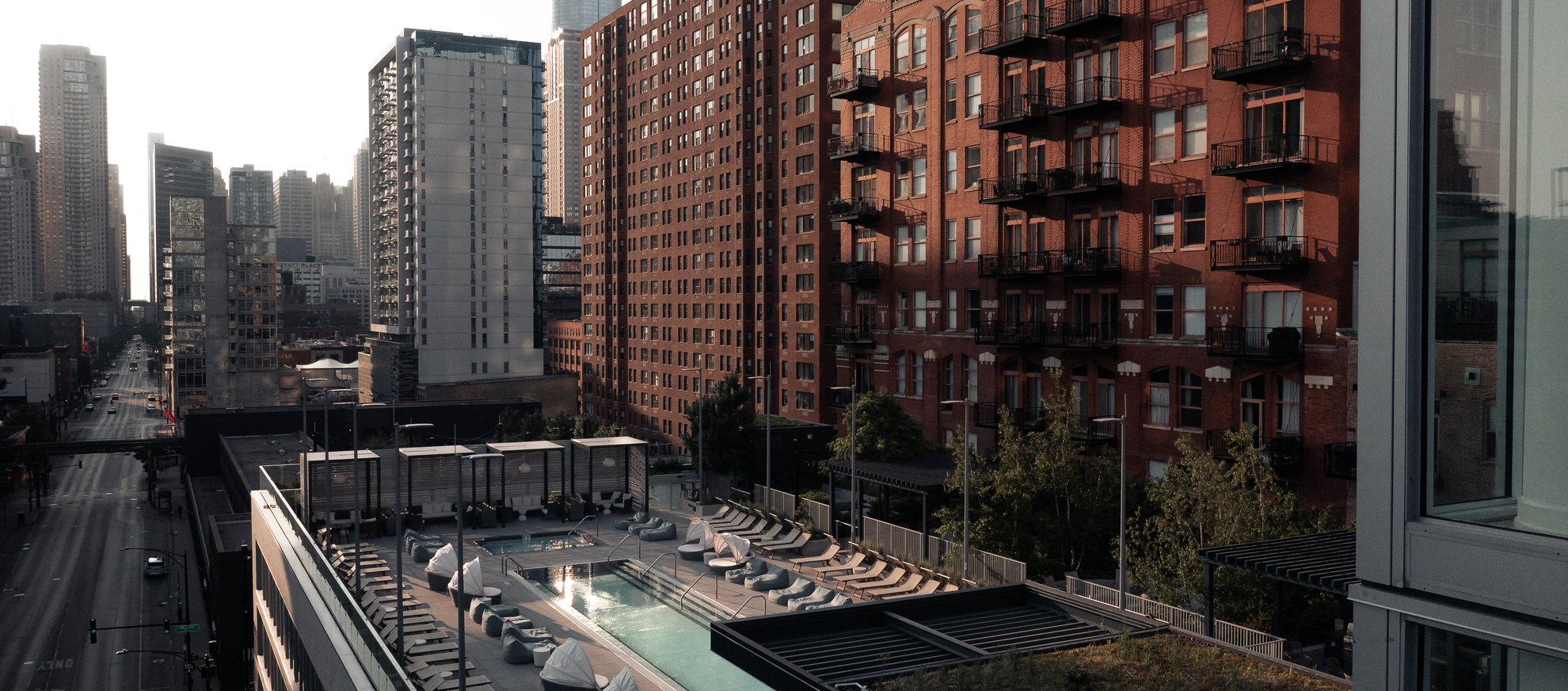
Level Chicago - River North
Check Rates →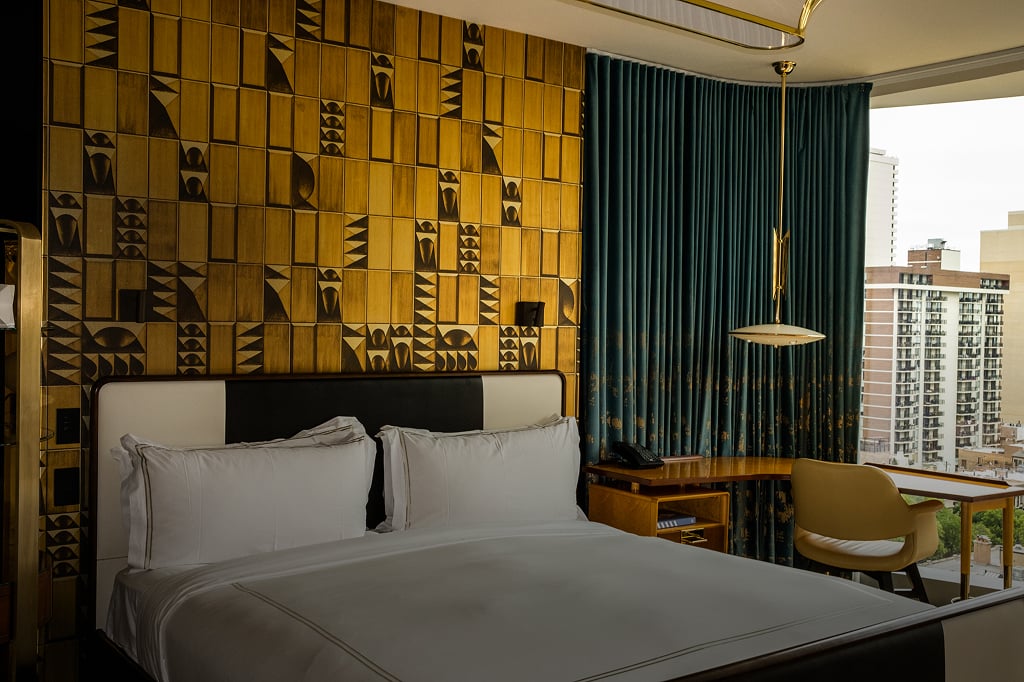
Viceroy Chicago
Check Rates →Magnificent Mile and Streeterville
Best for: Shoppers, lakefront walkers, classic big-hotel comfort
The Magnificent Mile is the stretch of Michigan Avenue north of the river – flagship stores, the Wrigley Building and Tribune Tower, and an easy walk east into Streeterville toward Navy Pier and the lakefront path. This is where Chicago feels most like a polished, walkable big city, and it is a comfortable, low-friction base for a first visit.
Expect established, full-service hotels and reliable comfort. The Warwick Allerton - Chicago in its 1920s landmark tower, Hotel Saint Clair - Magnificent Mile, and nearby The Whitehall Hotel capture the classic Mag Mile feel – central, walkable, and a few minutes from both the river and the lake.
The trade-off: It is a shopping-and-tourism corridor, so it trades some neighborhood character for convenience, and rates track the prime location.
Who should book here: Travelers who want shopping and the lakefront at the door, and anyone who prefers a classic, full-service hotel within easy walking distance of the river.
Gold Coast
Best for: Couples, refined travelers, quieter upscale streets
North of the Mag Mile, the Gold Coast is Chicago’s most elegant address – tree-lined streets of greystones and mansions, boutiques on Oak Street, and the beach at the end of Division. It is upscale and residential, a calmer counterpoint to the downtown bustle while still being a short walk or quick ride from everything.
The stays here skew refined. The Viceroy Chicago on Cedar Street and the Ambassador Gold Coast are the marquee picks, with The Whitehall Hotel sitting right on the Gold Coast edge of the Mag Mile.
The trade-off: You give up a little of the step-out-the-door action of River North in exchange for quieter, more residential streets – usually a feature for couples, occasionally a drawback for first-timers who want everything immediately underfoot.
Who should book here: Couples and travelers who want a more refined, residential base with easy access to the lakefront and downtown.
Top-Booked Chicago Tours
West Loop and Fulton Market
Best for: Food lovers, design-forward travelers, repeat visitors
The West Loop is where Chicago’s dining scene reaches its peak. Randolph Street’s “Restaurant Row” and the converted warehouses of Fulton Market hold many of the city’s most celebrated kitchens, and the area has become the place design-conscious travelers want to stay. It feels current and creative – a neighborhood that was industrial a decade ago and now sets the city’s tone.
The hotels match the energy. Soho House Chicago in a restored brick warehouse, The Hoxton, Chicago, Nobu Hotel Chicago, Level Chicago - Fulton Market for longer stays, and The Emily Hotel are built around the food-and-design scene rather than the convention crowd.
The trade-off: You are a short ride or a 15-20 minute walk from the Loop’s museums and the lakefront, so it is slightly less central than River North – a fair trade if dinner is the reason you came.
Who should book here: Food lovers and design-forward travelers, and repeat visitors who have already done the Loop and want a neighborhood with its own identity. If you loved building a trip around the restaurants in New Orleans, the West Loop is Chicago’s version of that idea.
Wicker Park, Lakeview, and Wrigleyville
Best for: Repeat visitors, neighborhood-first travelers, baseball fans
To feel the Chicago that locals actually live in, head to the North and Northwest Side neighborhoods. Wicker Park is the indie heart – vintage shops, music venues, and a design-hotel scene of its own. Lakeview and Wrigleyville bring tree-lined streets, the lakefront, and Wrigley Field, where a Cubs game turns the whole area into a block party.
Stays here are more characterful than corporate. The The Robey in a slim Art Deco tower over the Wicker Park six-corners and the The Inn at Wrigleyville put you in the middle of those neighborhoods rather than the tourist core.
The trade-off: You trade walk-everywhere downtown access for neighborhood texture – plan on a short ‘L’ ride to the Loop and museums. The Red and Blue lines make that easy.
Who should book here: Repeat visitors who already know downtown, baseball fans timing a Wrigley trip, and travelers who would rather wake up in a real neighborhood than a hotel district.
Plan your trip
Ready to book Chicago?
Check availability and rates for your dates.
Powered by Booking.com. Affiliate links — we may earn a commission at no extra cost to you.
Getting Around
Chicago is one of the most walkable and transit-connected big cities in the country, and it shows in the data – nearly all of the properties we reviewed sit within walking distance of restaurants and an ‘L’ stop. From the Loop you can walk to Millennium Park, the Art Institute, the Riverwalk, and across the river to River North without ever opening a rideshare app. The ‘L’ ties downtown to Wicker Park, Lakeview, and both airports, so a car is optional and often a liability with downtown parking. The one rule: pick a base near a train line and let the trains do the cross-town work.
More Verified Stays in Chicago
See all 51 →
Kimpton Gray Hotel
Check Rates →
The Godfrey Hotel Chicago
Check Rates →
Trump International Hotel & Tower® Chicago
Check Rates →
Ambassador Gold Coast - The Chicago Hotel Collection
Check Rates →
Villa D' Citta Bed & Breakfast
Check Rates →
SOPHY - Hyde Park
Check Rates →When to Go and What to Expect
The season changes the calculus more than the neighborhood does. Summer is peak for good reason – July highs average in the mid-80s, the lakefront and patios are in full swing, and festivals fill the parks. May and September stay comfortable, with September highs around the mid-70s and thinner crowds. Winter is genuinely cold – January highs hover around freezing with real snowfall – so a December or January trip rewards a walkable, transit-connected base like the Loop or River North where you can duck between museums, restaurants, and the train without long exposed walks.
Whatever the month, Chicago’s core stays easy to navigate. The lakefront and river are the constants; the neighborhoods just dress differently for the weather.
The Quick Guide
Pick your neighborhood based on what you value most:
- First visit + museums + transit: The Loop / Millennium Park
- Dining + nightlife + central energy: River North
- Shopping + lakefront + classic comfort: Magnificent Mile / Streeterville
- Refined + quiet + couples: Gold Coast
- Food scene + design + repeat visit: West Loop / Fulton Market
- Local vibe + neighborhoods + baseball: Wicker Park / Lakeview / Wrigleyville
About one in five of the Chicago properties have a pool and about a third offer a spa, so if those matter, filter for them early – they are more common in the full-service downtown and Mag Mile towers than in the boutique neighborhood stays.
Browse all 51 scored properties on the Chicago city page, or go straight to the collections that match your trip: luxury, boutique, couples, and families. The travel style quiz can match you to the right Chicago property based on what matters most to your trip.
Already have the home base sorted? Our ultimate Chicago bucket list covers what to actually do once you have checked in – lakefront mornings, architecture cruises, deep dish, and the neighborhoods worth the trip out from downtown.
Frequently Asked Questions
Common questions about staying in Chicago, answered with data from our research.
What is the best neighborhood to stay in Chicago for first-timers?
The Loop and River North are the two best bases for a first trip. The Loop puts you on Millennium Park, the Riverwalk, the Art Institute, and the Theatre District, with the city’s densest train access. River North sits just across the river with the highest concentration of restaurants, galleries, and nightlife. Both are central and walkable – nearly all of the Chicago properties we reviewed are within walking distance of dining and an ‘L’ stop.
Is it better to stay on the Magnificent Mile or in the Loop?
Stay on the Magnificent Mile if shopping, the lakefront, and a classic big-hotel feel are your priorities – it runs north of the river along Michigan Avenue and connects to Streeterville and Navy Pier. Stay in the Loop if you want to be closest to Millennium Park, museums, and the train lines that reach both airports. They are about a 15-minute walk apart, so neither is a wrong answer for a first visit.
Where should foodies stay in Chicago?
The West Loop and Fulton Market. Randolph Street’s ‘Restaurant Row’ and the converted Fulton Market warehouses hold the city’s most celebrated dining, and the hotels there – Soho House Chicago, The Hoxton, Nobu Hotel Chicago, and The Emily Hotel among them – are design-forward and built around that scene. River North is the runner-up for sheer restaurant density right downtown.
How many days do you need in Chicago?
Three to four days is the sweet spot. That gives you time for a lakefront and Millennium Park morning, an architecture river cruise, a West Loop dinner, and at least one neighborhood beyond downtown – Wicker Park, Lincoln Park, or Wrigleyville. A long weekend works if you stay central; add a day if museums or a Cubs or Sox game are on the list.
What is the best time to visit Chicago?
Late spring through early fall. June through September is peak for good reason – warm days, festivals, patios, and the lakefront at its best, with July highs averaging in the mid-80s. May and October are pleasant shoulder months with thinner crowds. Winter is genuinely cold, with January highs around freezing and real snow, so pack accordingly and lean into indoor culture and walkable, transit-connected neighborhoods.
Browse by style in Chicago
Related Guides
More travel intel for planning your trip.