
Where to Stay in Charleston SC on Your First Trip
From the pastel mansions of the Battery to the buzz of Upper King Street, Charleston rewards the right home base.
The Charleston Stay Decision
Whether you’re planning your first trip to Charleston or coming back for a deeper visit, your neighborhood shapes the entire experience. Stay in the Historic District and you’ll walk cobblestone streets past pastel mansions to dinner. Stay on Upper King and you’ll be in the thick of the restaurant boom that’s put Charleston on every food magazine cover. Stay on the islands and you’ll trade history for salt air and uncrowded sand.
We reviewed 41 Charleston properties to help you pick the best area for your trip. Here’s the neighborhood breakdown.
If you already know your trip style, skip straight to the pages that matter most: Charleston couples stays, Charleston boutique stays, Charleston luxury stays, or Charleston family-friendly stays.
Historic District and South of Broad
Best for: First-time visitors, history lovers, couples
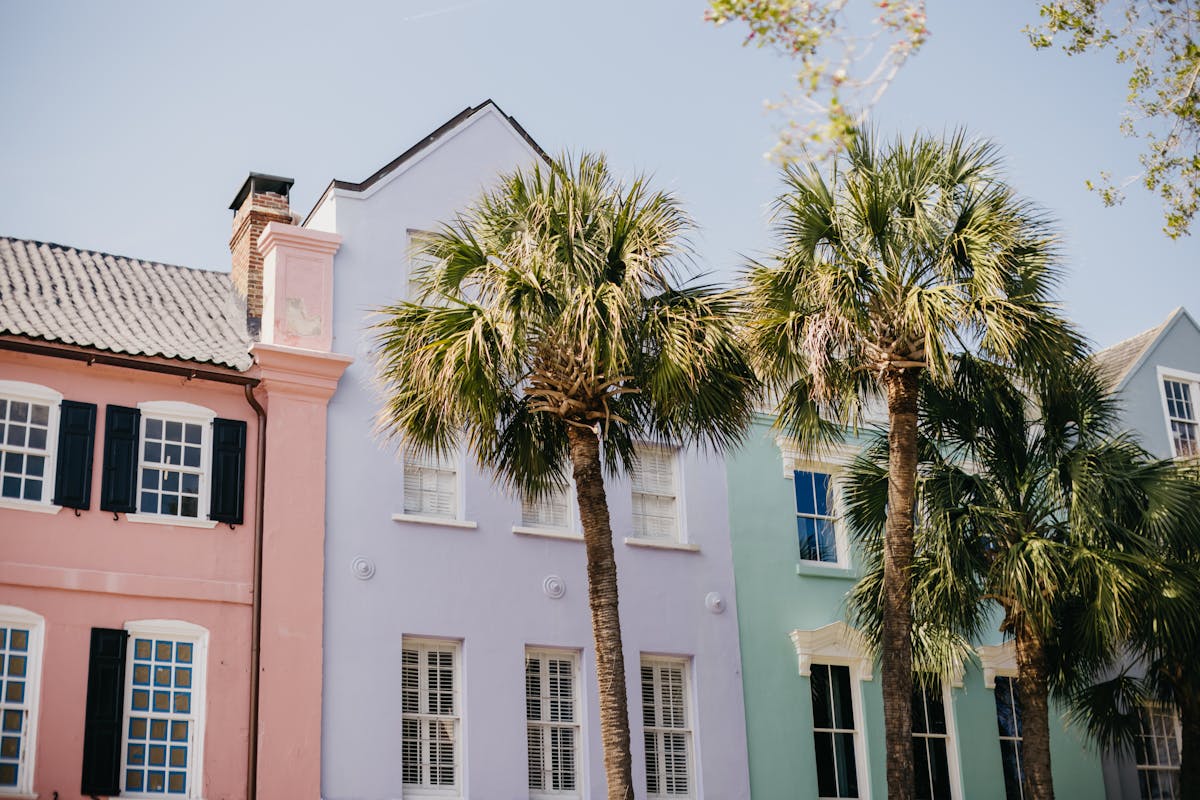
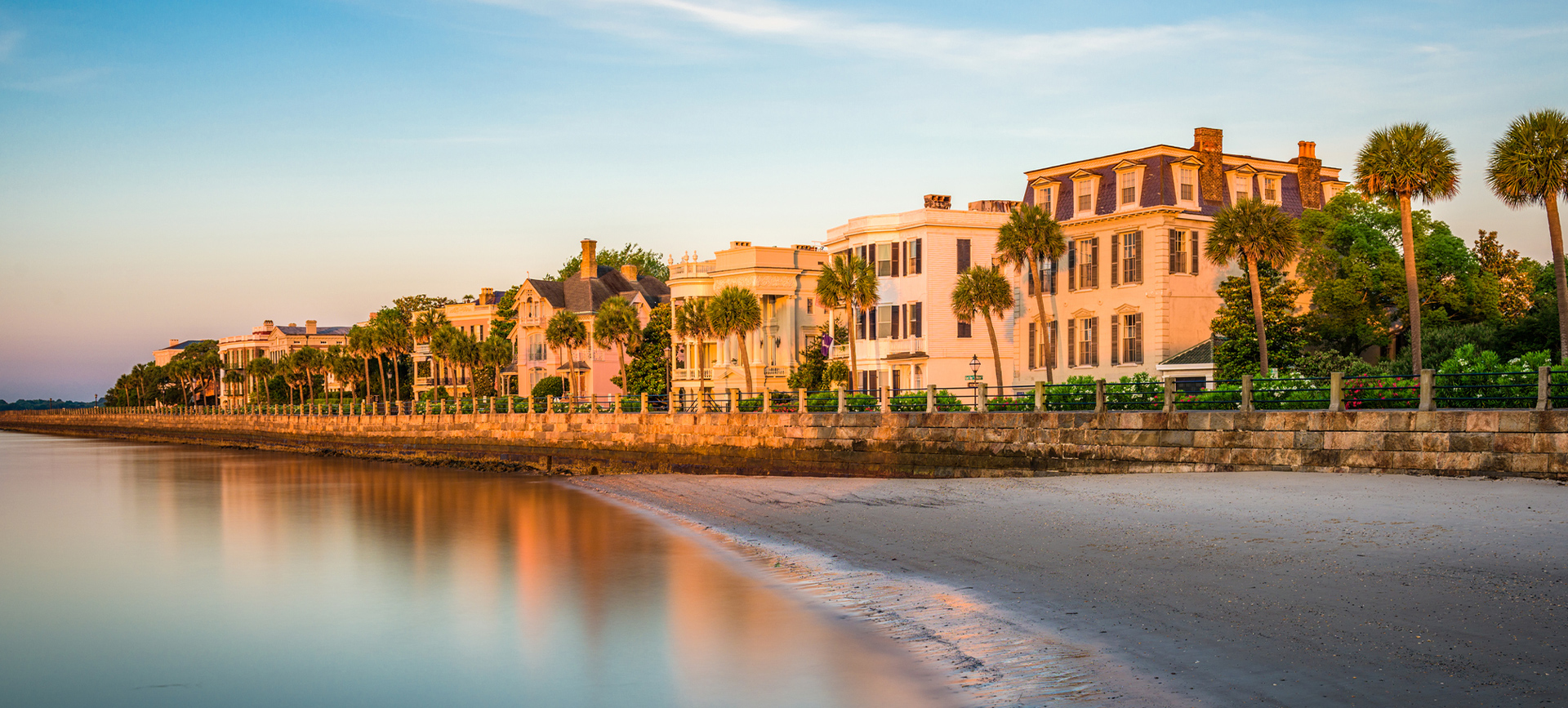
This is the Charleston you’ve seen in photos. Rainbow Row’s pastel Georgian houses, the Battery promenade overlooking the harbor, horse-drawn carriages on Meeting Street, and centuries-old churches framed by live oaks. South of Broad is the most prestigious residential section – quieter, more refined, and deeply historic.
Walkability is one of Charleston’s biggest strengths. A majority of properties we looked at are within walking distance of restaurants and attractions, and the Historic District is where that advantage is most concentrated.
The hotel scene here leans toward boutique inns and restored historic buildings. Think four-poster beds, courtyard gardens, and piazzas (Charleston’s signature side porches). The properties tend to be smaller and more intimate than chain hotels, which suits the neighborhood’s personality.
The trade-off: Premium pricing and limited parking. This is the most expensive part of the city, and street parking is competitive. Nearly all of the properties offer parking, so plan accordingly.
Who should book here: Anyone visiting Charleston for the first time. If you want to understand what makes this city special, this is home base. If you’ve been to New Orleans’ French Quarter, the Historic District has a similar blend of history and walkable charm, but quieter and more residential in character.
Where We’d Stay in Charleston


Upper King Street
Best for: Food lovers, nightlife, design-forward travelers
Upper King is Charleston’s dining and nightlife corridor. The section roughly from Marion Square north has become one of the most exciting restaurant streets in the South – James Beard nominees, cocktail bars, and independent shops packed into a walkable stretch. If Charleston’s food scene is what drew you here, this is where you want to be.
The hotel options on and around Upper King tend to be newer, more design-conscious properties. Modern interiors, rooftop pools, and a younger energy than the Historic District. A handful of the Charleston properties have a rooftop, and Upper King has the highest concentration.
The trade-off: Noise on weekend nights. King Street gets lively Thursday through Saturday, which is either a feature or a bug depending on your trip style.
Who should book here: Couples and friend groups who want walkable access to Charleston’s best restaurants and bars. If you loved Nashville’s Gulch district, Upper King has a similar polished-but-energetic feel.
Plan your trip
Ready to book Charleston?
Check availability and rates for your dates.
Powered by Booking.com. Affiliate links — we may earn a commission at no extra cost to you.
Cannonborough-Elliotborough
Best for: Repeat visitors, locals’ vibe, budget-conscious travelers
This residential neighborhood just west of King Street is Charleston’s best-kept secret for visitors who want authenticity over tourism. Tree-lined streets, local coffee shops, and some of the city’s best casual restaurants. It’s walkable to both King Street and the Historic District but feels distinctly more neighborhood than tourist zone.
Properties here tend to be smaller inns and vacation rentals rather than full-service hotels. The trade-off is fewer amenities; the payoff is a more genuine Charleston experience and noticeably lower nightly rates.
The trade-off: Fewer hotel amenities and you’ll walk 10-15 minutes to reach the main attractions. Not ideal if you want concierge service or a pool.
Who should book here: Repeat visitors who already know the Historic District, budget-conscious travelers who want to stay central without paying Historic District premiums, and anyone who prefers neighborhoods over tourist corridors.
Mount Pleasant
Best for: Families, road-trippers, value seekers
Across the Arthur Ravenel Jr. Bridge from downtown, Mount Pleasant offers a suburban base with easy access to both Charleston and the beaches. Shem Creek is the main draw – a working waterfront with seafood restaurants, dolphin-watching kayak tours, and a boardwalk. The neighborhood has more chain hotels than downtown, which means better parking, newer rooms, and often significantly lower rates.
If your Charleston trip is family-first, the Charleston families collection is the fastest way to narrow the field before you compare neighborhoods one by one.
The trade-off: You need a car. Downtown Charleston is a 15-minute drive over the bridge, and the bridge can back up during rush hour and weekend evenings. You’ll miss the walkability that makes downtown special.
Who should book here: Families with young children, visitors who are combining Charleston with a broader Southeast road trip, and anyone who prioritizes value and parking over walkable location.
Isle of Palms and Sullivan’s Island
Best for: Beach escapes, relaxation, second-half-of-trip stays
These barrier islands east of Mount Pleasant offer Charleston’s best beaches. Sullivan’s Island is quieter and more residential – beautiful sand, a lighthouse, and a handful of restaurants. Isle of Palms is slightly more developed, with a few resorts and vacation rentals fronting wide, uncrowded stretches of Atlantic beach.
A handful of the Charleston-area properties offer beach access, and it’s concentrated on the islands. If beach time is non-negotiable, filter for it.
The vibe is completely different from downtown – flip-flops, seafood shacks, and salt air. Properties are mostly vacation rentals and a few resort-style hotels. The beach itself is the attraction, not the nightlife or dining scene.
The trade-off: Isolation from downtown. You’re 30-40 minutes from the Historic District, and there’s limited dining on the islands themselves. This is a beach trip, not a Charleston culture trip.
Who should book here: Couples or families who want a beach-focused getaway, or repeat visitors who’ve done downtown before. The best play is often splitting your trip: start downtown, then move to the islands for the second half.
The Quick Guide
Pick your neighborhood based on what you value most:
- History + walkability + first visit: Historic District / South of Broad
- Food + nightlife + design: Upper King Street
- Locals’ vibe + budget: Cannonborough-Elliotborough
- Family logistics + value + parking: Mount Pleasant
- Beach + relaxation: Isle of Palms / Sullivan’s Island
About one in five of the Charleston properties have a pool. If that matters to your trip, filter for it early – it’s more common in newer Upper King and Mount Pleasant properties than in the Historic District’s converted inns.
Browse all 41 scored properties on the Charleston city page, or go straight to the revenue-driving collections: couples, boutique, luxury, and families. The travel style quiz can match you to the right Charleston property based on what matters most to your trip.
If you’re planning a broader Southeast trip, Nashville is a natural pairing – about nine hours by car or a short flight. The music-city energy is a sharp contrast to Charleston’s historic charm, and the hotel scenes complement each other well. See our Nashville summer bucket list for trip-planning ideas.
Frequently Asked Questions
Common questions about staying in Charleston, answered with data from our research.
What is the best area to stay in Charleston?
The Historic District is the best area for first-time visitors. You’re walking distance to Rainbow Row, the waterfront, Charleston City Market, and the best restaurants in the city. Upper King Street is the top pick for food lovers and nightlife seekers who want a more energetic, walkable stretch. The good news is that walkability is a strong suit across Charleston’s core – a solid majority of properties we reviewed are within walking distance of dining and attractions.
Is it better to stay downtown Charleston or at the beach?
Downtown if it’s your first visit. Charleston’s charm is concentrated in the Historic District and Upper King Street – the architecture, restaurants, and history are the main draw. The beaches (Isle of Palms, Sullivan’s Island, Folly Beach) are beautiful but are 20-30 minutes from downtown by car. If you’ve done downtown before and want a pure beach trip, Isle of Palms and Sullivan’s Island deliver on that. Many repeat visitors do a split: a few nights downtown, then move to the islands.
How many days do you need in Charleston?
Three to four days is the sweet spot. That gives you time to explore the Historic District on foot, spend an afternoon on Upper King Street, visit a plantation or Fort Sumter, and have a beach day on Sullivan’s Island. Weekend trips work but you’ll be rushing. If food is a priority, add an extra day – Charleston’s restaurant scene is one of the best in the South and deserves unhurried evenings.
What is the best time to visit Charleston?
March through May and September through November. Spring is peak season for good reason – the azaleas are blooming, temperatures are in the 70s, and the humidity hasn’t arrived yet. Fall is equally pleasant with smaller crowds and lower rates. Summer (June-August) is hot and humid, with afternoon thunderstorms. Winter is mild by Northern standards but quieter – a good time for deals if you don’t mind temps in the 50s.
Browse by style in Charleston
Related Guides
More travel intel for planning your trip.